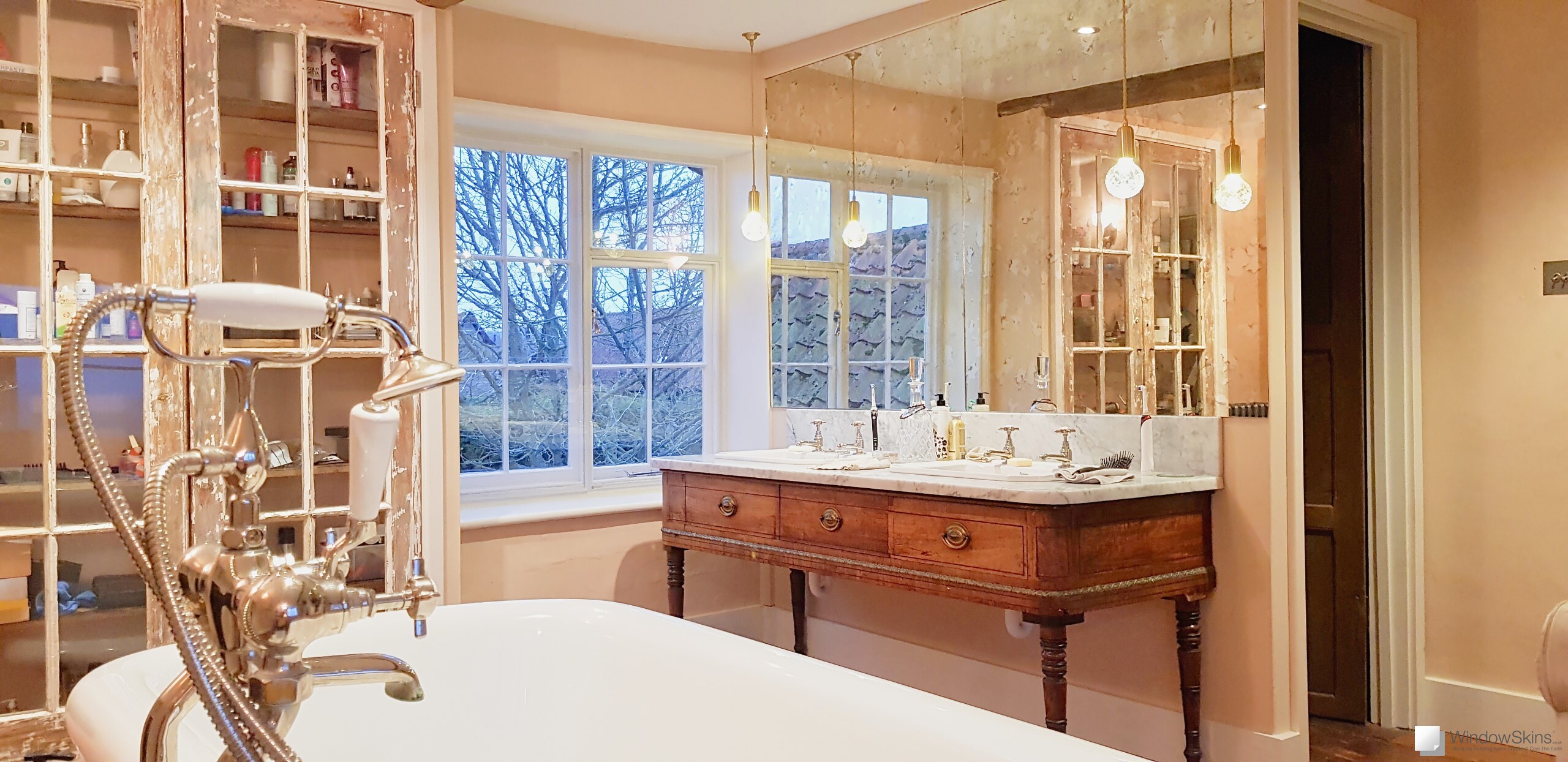
WindowSkins are an attractive alternative to costly double glazing or outdated traditional secondary glazing.
Well suited for timber casement windows they significantly reduce problems related to Cold, Draught, Condensation and Noise.
Approved for Listed Buildings & Conservation Areas, WindowSkins can reduce heating costs and improve comfort.
Not just effective, the near-invisible design offers an unrivalled elegance and discreet aesthetic.
We offer a comprehensive measure, supply & professional fit service.
As Featured In



Build Specification
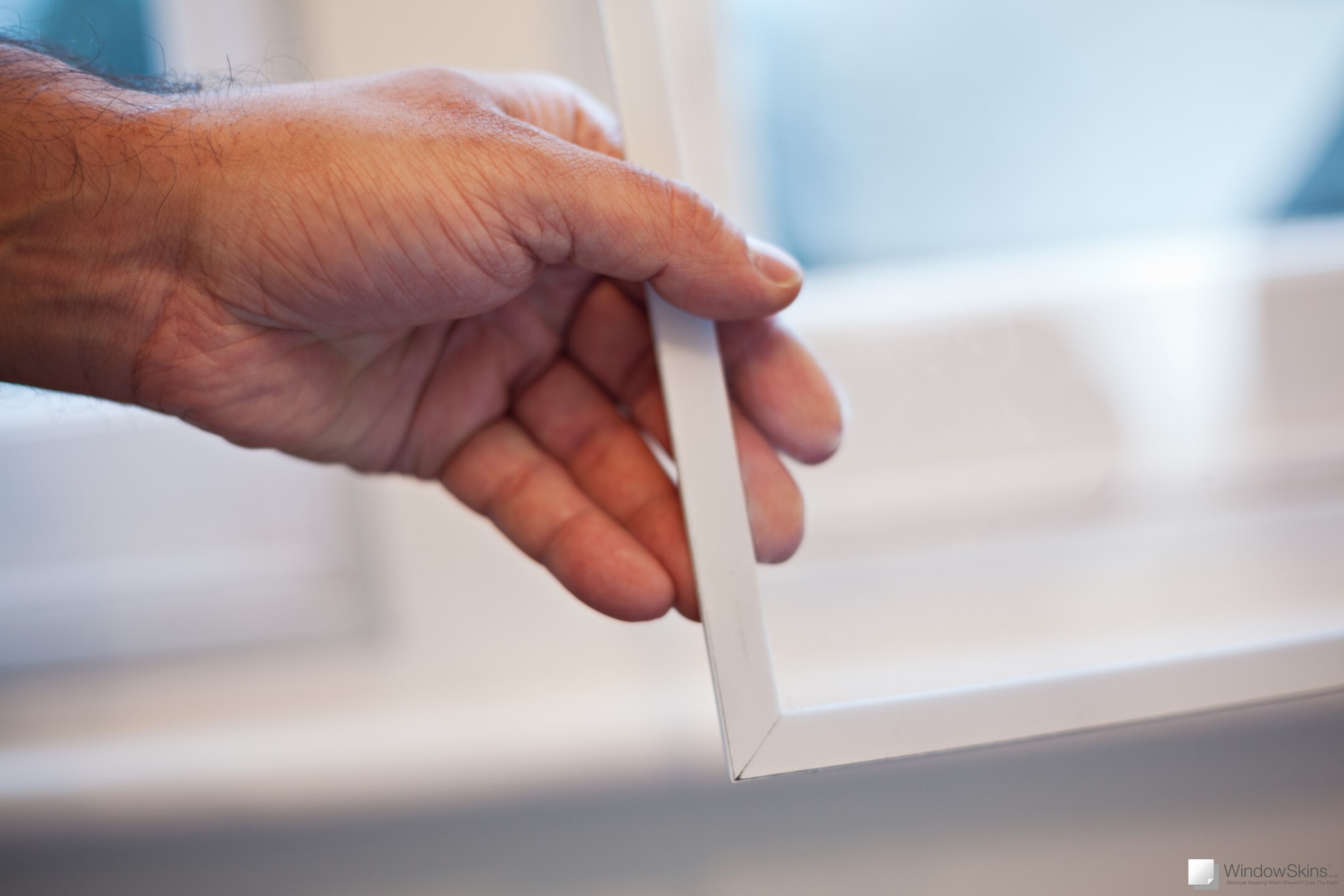
Our magnetic casement WindowSkins are typically built using 3mm Acrylic XT panels, paired with premium 13mm magnetic tapes.
Every WindowSkin is carefully crafted with exacting mitre joins in each corner, adhered with a premium foam backed TESA adhesive for long lasting use.
Precision laser measuring using our proprietary software solution ensures a perfect fit every time, even for irregular shaped windows.
The magnetic system creates an airtight seal, and is easily removed for venting and storage.
This significantly reduces the problems of Cold, Draught, Condensation and Noise.
Where noise is of primary concern, we can increase the panel thickness to 4mm.
For Casement Windows, There Are Three Possible Mounting Points
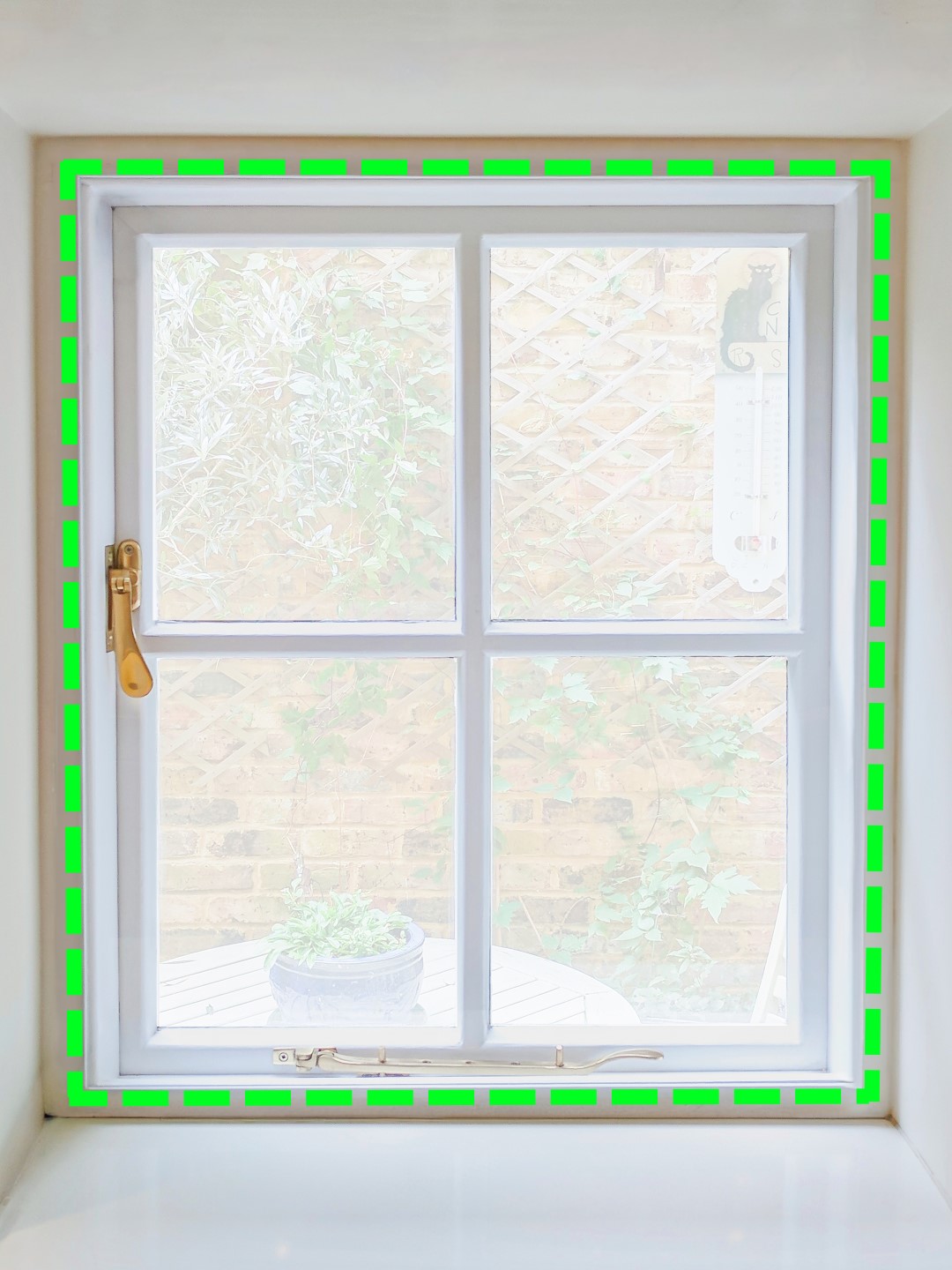
Outer Placement
(Standard Placement)
This is where magnetic tapes are positioned on the front face of the window frame, near the inside edge.
This is the default (and simplest) fitting but, requires adequate space around the frame of the casement window.
The minimum frame space required for optimal fitting is 18mm and should ideally be clear of obstructions.
The Outer Placement is the optimal position for noise reduction as the gap between glass and panel and total coverage is maximised.
Paintwork should be in fair condition and the window in a reasonable state of repair.
Click here to view ‘Outer Placement’ image examples
Subframe Placement
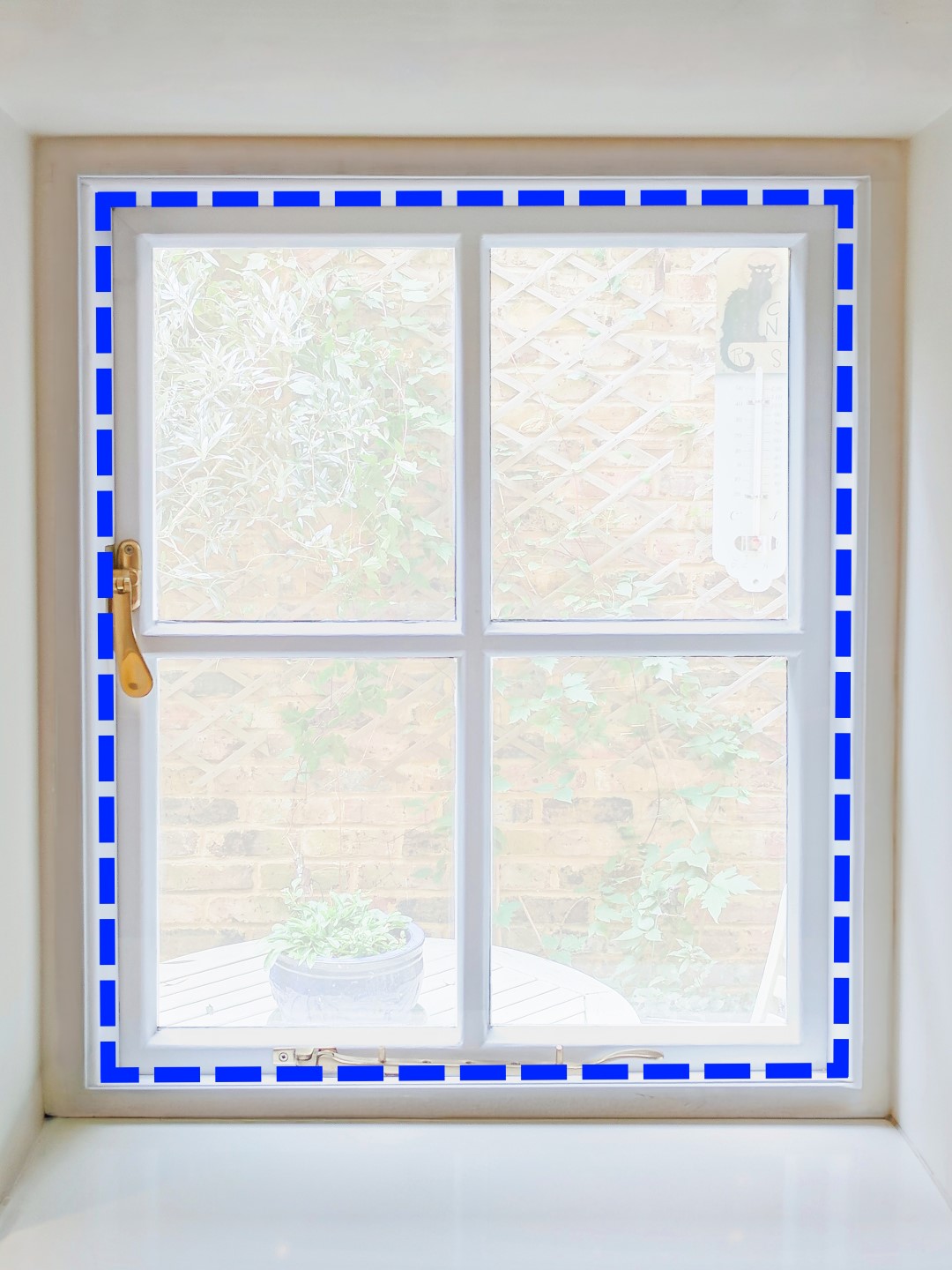
This is where a magnetised 13mm subframe is fit to the the side face of the window frame, near the inside edge.
This is the more discreet option, as the WindowSkin sits flush within the frame recess and, can often be a preferred option to the Outer Placement.
Subframes are typically used in tight situations, where there are shutters, narrow frames surrounds or other obstructions preventing fitting in the Outer Placement.
Constructed using PVC, the subframe design is unobtrusive and does not reduce visibility through the window.
Available in White or Teak, but can be painted or vinyl coated to a colour of your choice.
Click here to view ‘Subframe Placement’ image examples
Both Outer Placement & Subframe Placement provide the best thermal efficacy, as they prevent draught as well as cold.
Inner Placement
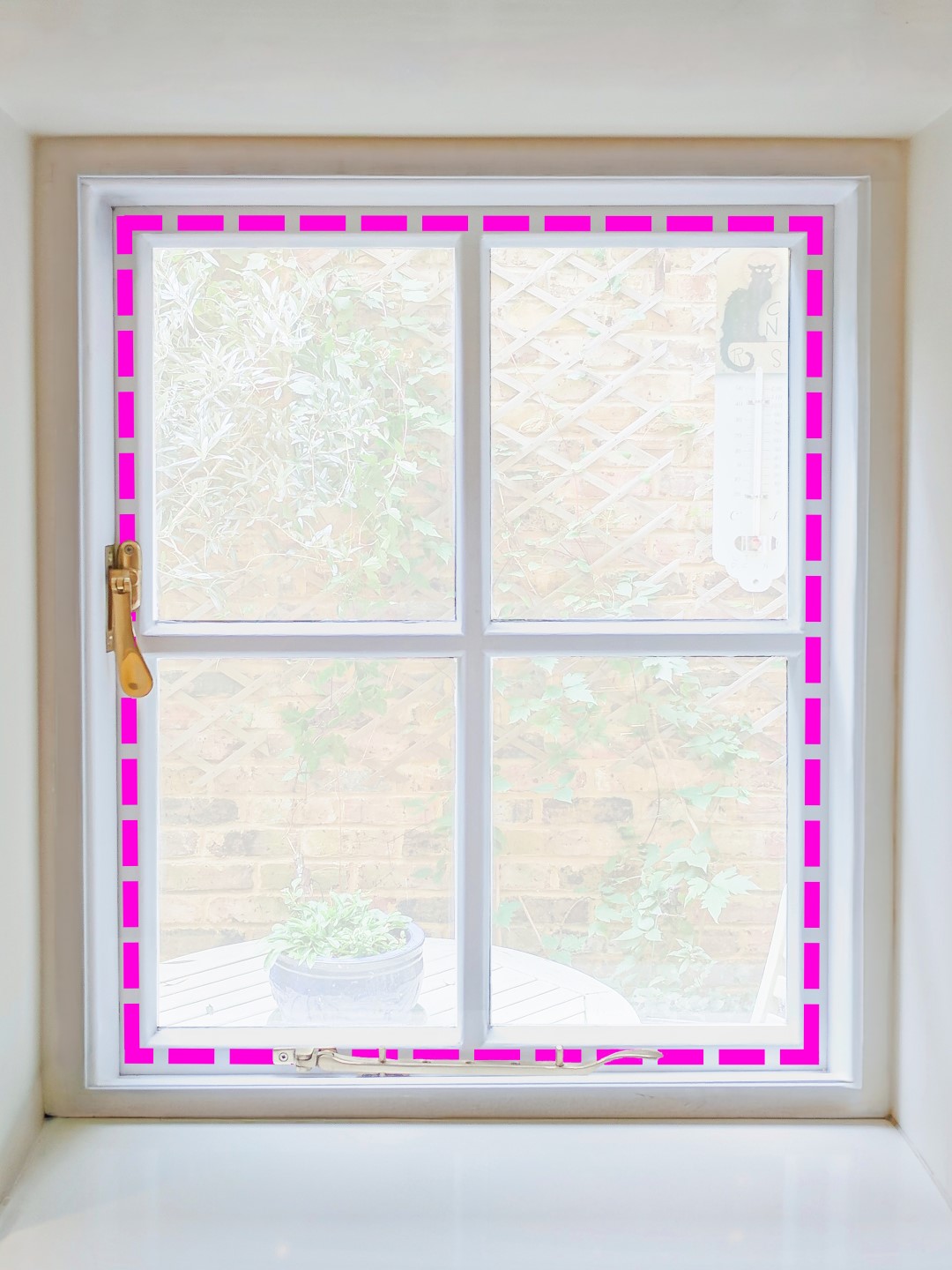
This is where magnetic tapes are positioned on the front face of the window casement (or fanlight), nearest the glass.
This is the most discreet option, as the overall size of WindowSkin is minimised. Additionally, it remains possible to open the window without requiring removal of the WindowSkin.
However, this fitting is the least thermally efficient, as draughts are not blocked (unlike Outer & Subframe placements).
Fitting is also complicated by window fasteners, stays and locking hardware, remediation of which significantly increases cost.
For this reason, we generally avoid the use of Inner placement for all but fixed windows (non-opening).
Click here to view ‘Inner Placement’ image examples
Panel Layout
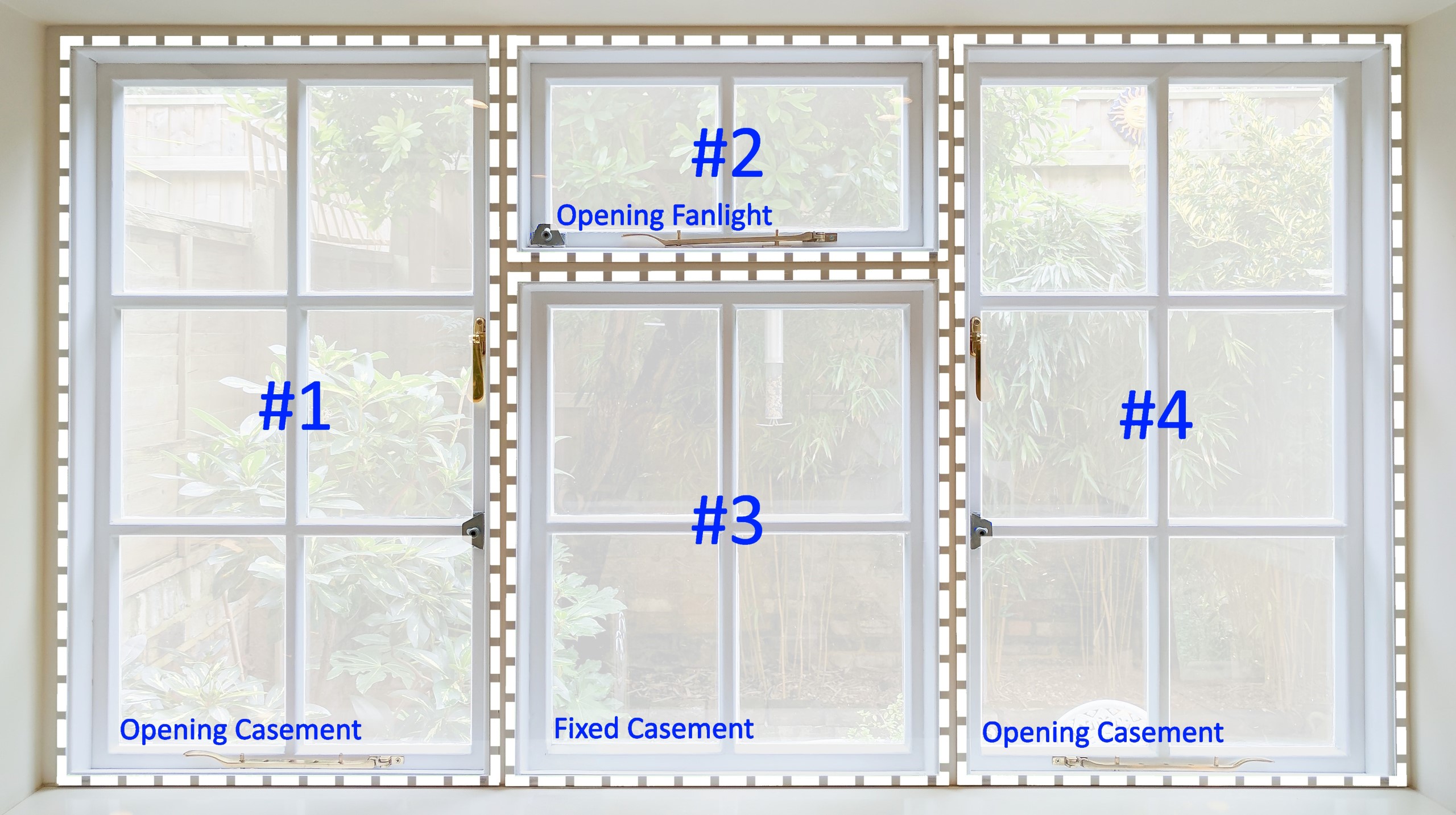
For casement windows, as standard, we always mirror the window frame layout.
This standard layout offers maximum utility for removal, venting and storage and, enhances the ratio of magnetism to surface area.
The standard layout also increases the exposure of natural wood surfaces, something considered more desirable compared to reflective surfaces.
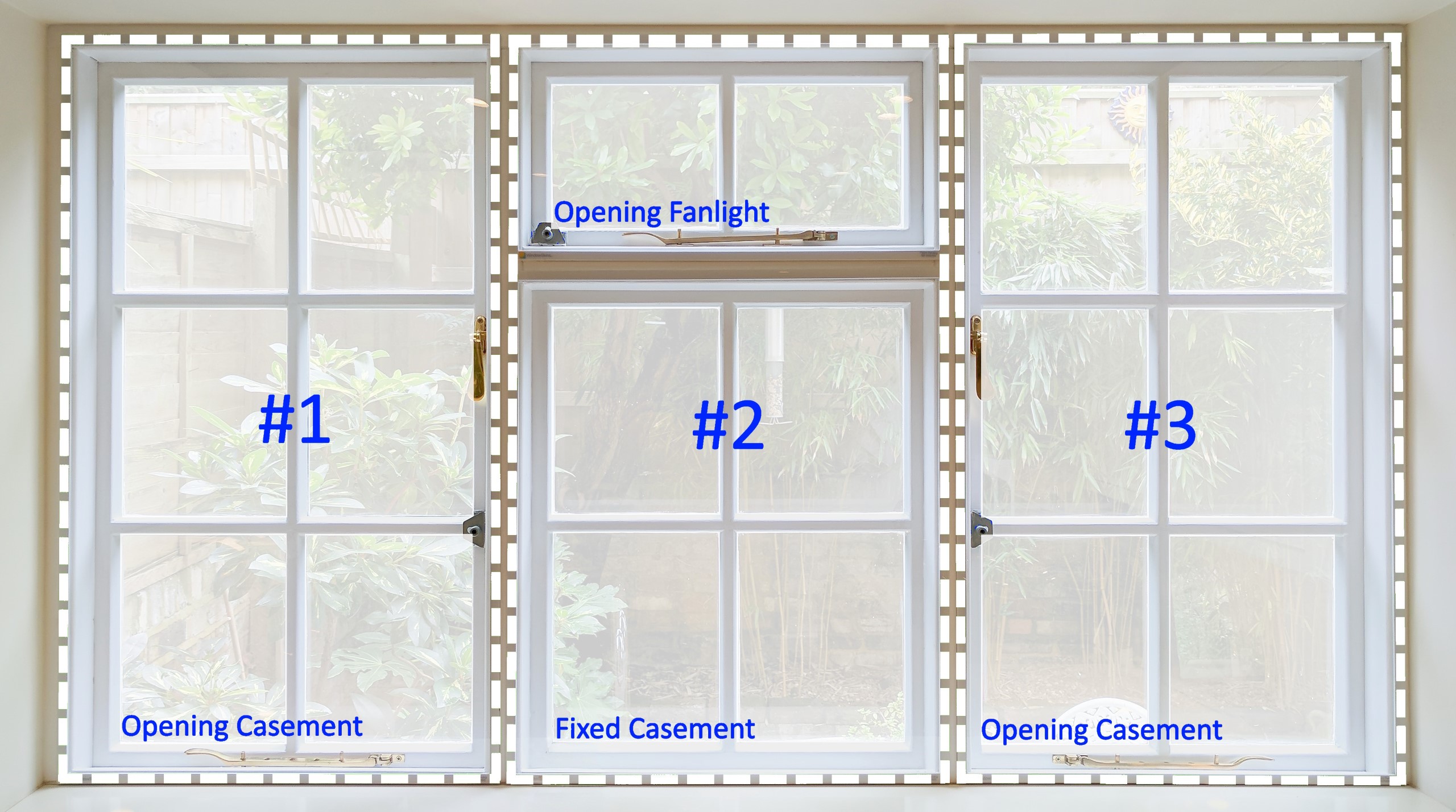
Assuming fitting to the Outer Placement, for smaller windows it is possible to merge fanlights with casements (see image above).
Whilst this can modestly lower costs, some utility is lost to the opening fanlight (see venting).
It should be noted that we do not advise merging larger casements and, due to the impairment of magnetism to surface area ratio, any subsequent related adhesive failure would not be covered by warranty (unless by prior agreement and waiver).
Obstructions
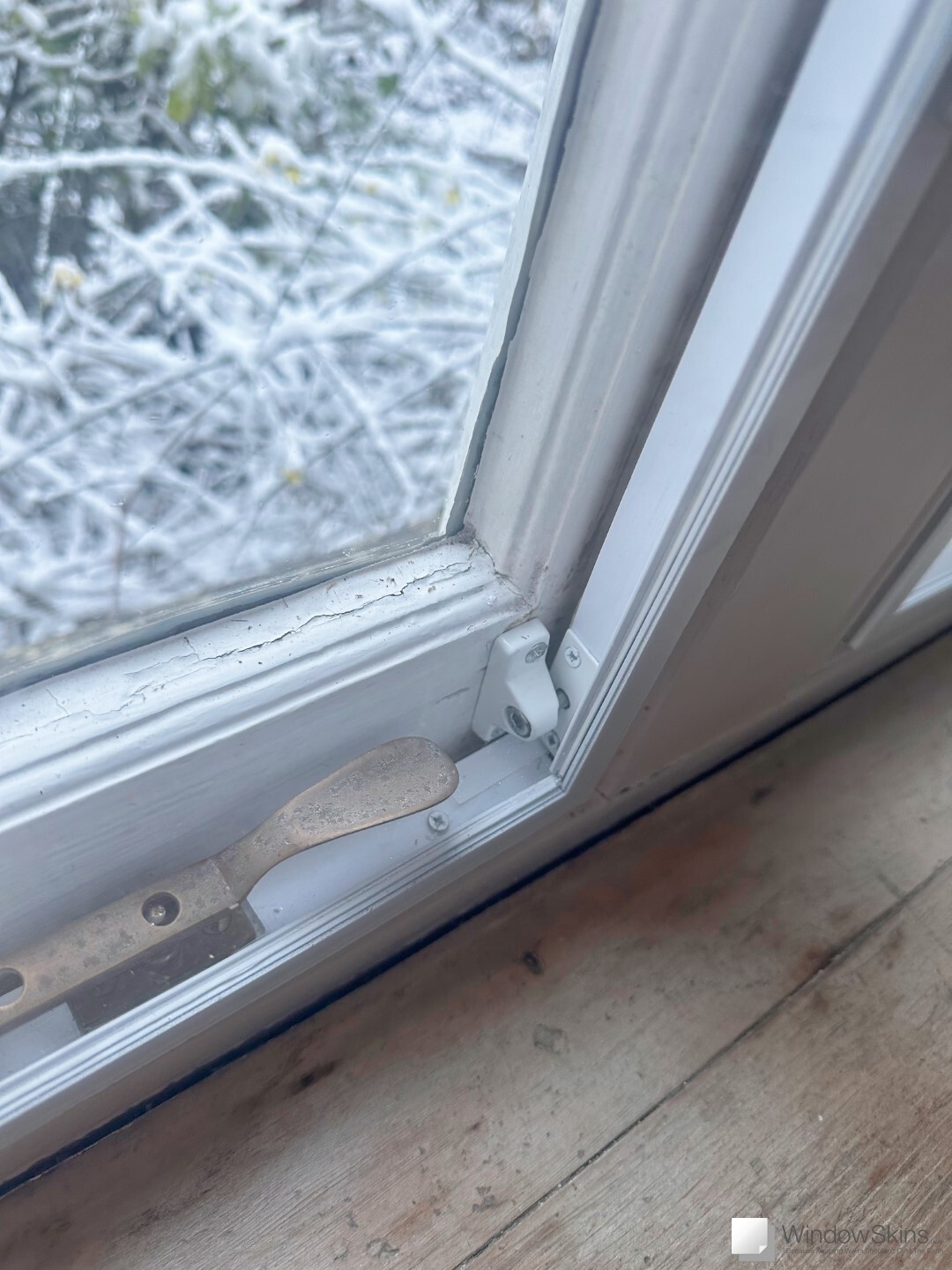
Regardless of obstruction, our specialist expertise provides for a myriad of often simple solutions to seemingly difficult problems.
Typical obstructions are outlined below;
- Narrow/Uneven Surfaces: where part or all of the window frame is narrow or uneven.
- Flaky Surfaces/Paintwork: which will likely cause the magnetic tapes adhesive to fail over time.
- Blinds: generally compatible by remounting the blind bracket on spacers or fitting a subframe.
- Shutters: usually require a subframe to maintain compatibility.
- Ironmongery & Locks: usually bypassed, remounted or replaced with a suitable alternative.
- Low Voltage Cables: we usually embed or reposition low voltage cables and junction boxes.
- Alarm Sensors: if obstructing, they may need repositioning by a qualified technician.
Please note that all workarounds are on a best efforts basis so compatibility is not always guaranteed.
Horizontal Split Panels
For casement windows with an integrated opening fanlight, we offer a ‘Horizontal Split Panel’ option.
This is where the WindowSkin is constructed as two sections, upper and lower, butting together in front of the (recessed) frame transom.
They are joined using a floating magnetic connector, and when in place form one continuous panel.
Horizontal Split Panels are convenient as access to the fanlight is made easier for opening and venting.
They are also practical for storage, collapsing down to a smaller form factor, which can simplify storage during summer.
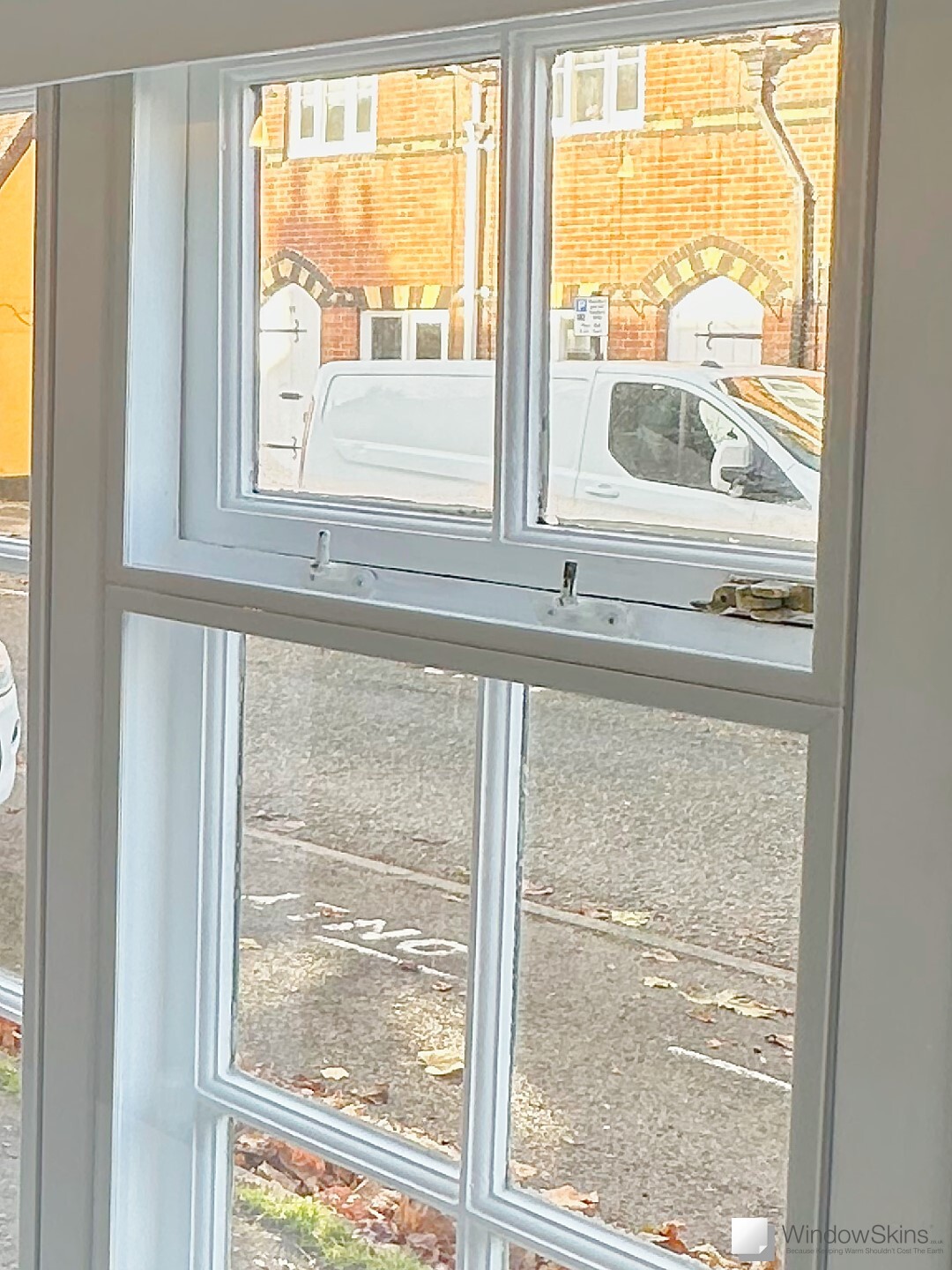
Horizontally Split WindowSkin fitted to a Casement Window
(Click image to enlarge)
Vertical Split Panels
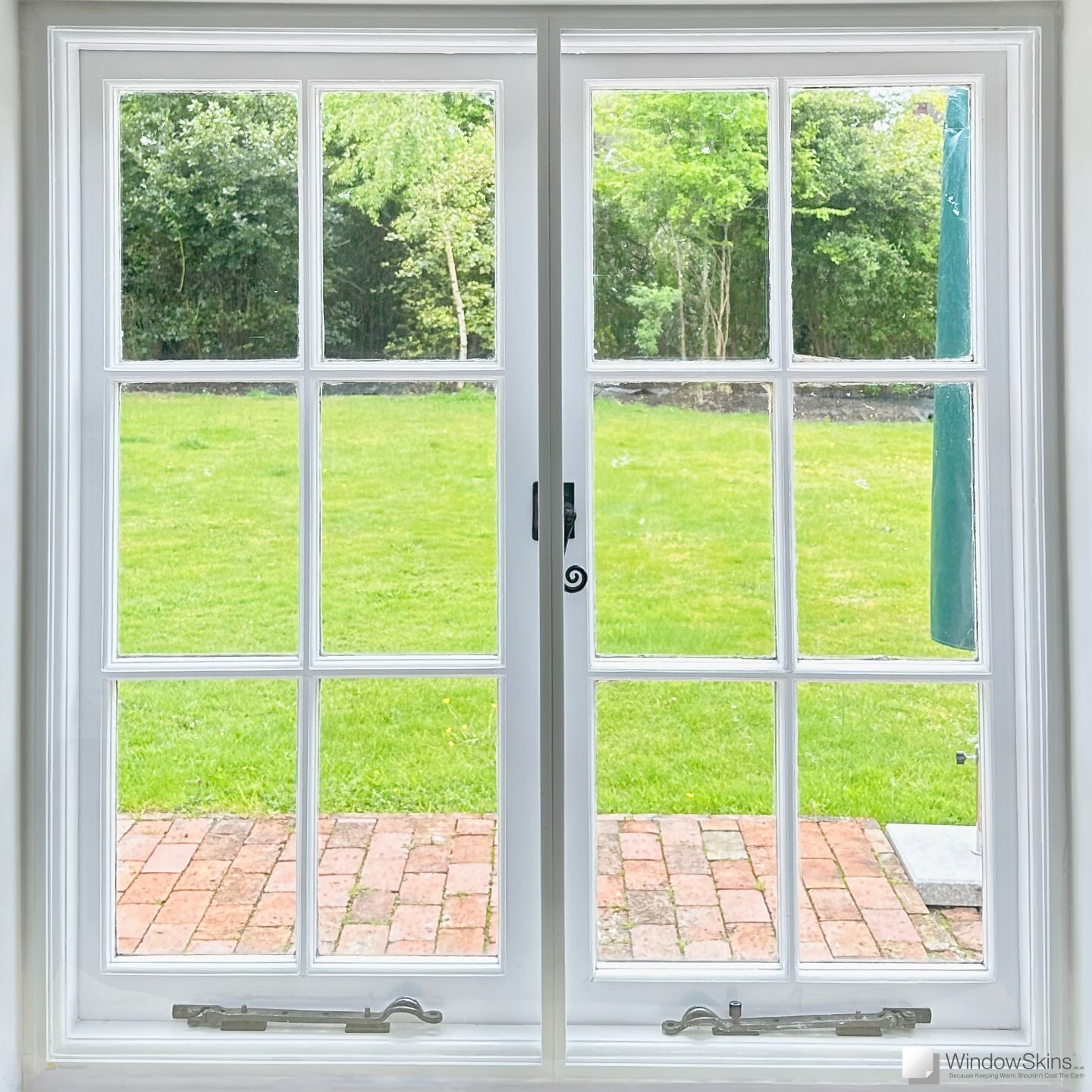
Double opening casement window with vertically split WindowSkin
(Click image to enlarge)
For double opening casement windows , we also have the ‘Vertical Split Panel’ option.
This is where the WindowSkin is constructed as two sections, left & right, butting together in front of the centre partition.
They are joined using a floating magnetic connector, and when in place form one continuous panel.
Vertical Split Panels are convenient, as access is made easier for opening and venting, since only one side need be removed.
They are also practical for storage, collapsing down to a smaller form factor, which can simplify storage during summer.
We also offer a three-section Vertical Split Panel for larger windows (typically having multiple recessed timber mullions).
Venting
Being lightweight and magnetically attached, opening for venting is both easy and straightforward.
The WindowSkin panels are simply lifted off and placed aside, whereby the casement window can be opened in the usual way.
When replacing, the magnetic panels softly snap back in position. With no special tooling, only minimal effort is required.
During the warmer summer months, WindowSkins can be easily removed and stored for continuous and frequent opening of the window.
Unlike our Sash WindowSkins, Casement windows do not require the use of a Venting Arm.
Storage
Magnetic secondary glazing is designed to be easily removed and stored during the summer months.
Whilst not a requirement (they may be left in-place year round), this can be convenient for frequently opened windows.
Typically weighing around 2-3kg for a large Casement WindowSkin, they are light and small enough to be handled and stored easily.
They can be wrapped in bubble wrap or a soft cotton sheet, and stored flat under a double bed.
Alternatively, we can provide felt lined storage sleeves at additional cost.

Colour Matching
WindowSkins are available in white or a natural ‘Brown-Black’ as standard.
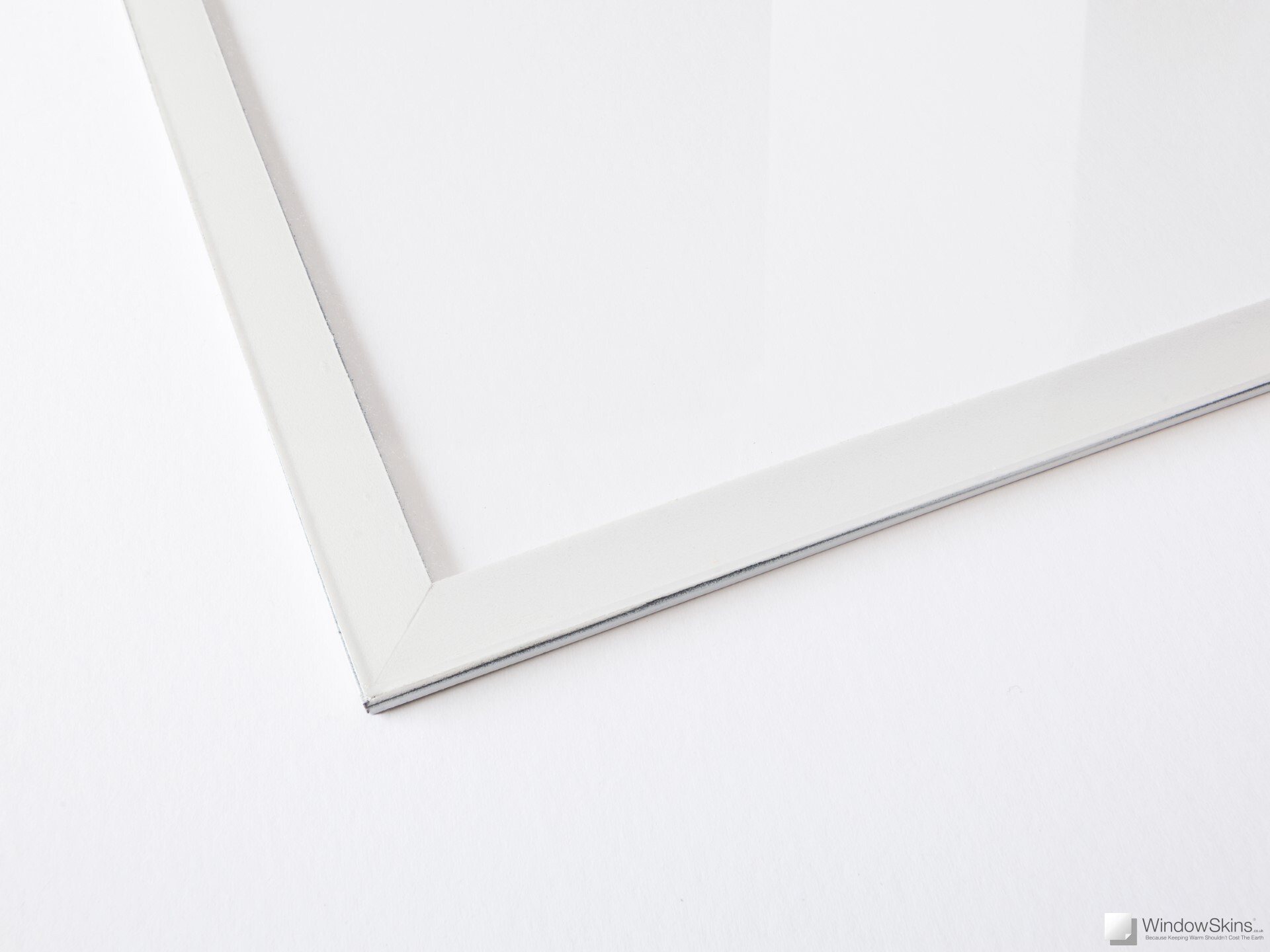
Unlike most, our white magnetic tapes are not just white on the front face but also both leading edges.
This ensures there are no unsightly black lines on either panel or window.
It is also possible to colour match using most water based paints or from an extensive range of wood grain vinyl finishes (at additional cost).
We find that Farrow & Ball paints (Estate Eggshell, 20% sheen) work particularly well and appear to be most popular. We have also had good results with Little Greene, COAT & Earthborn paints.
Our paintworks comprise three coats (one primer, two top coats) and each panel is individually masked to prevent overspray. The final result is a smooth spray finish with crisp lines and minimal bleed.
Additionally, all magnetic tapes, subframes (where present) and most ancillary components are included for colour matching.
Click here to view ‘Colour Matching’ image examples
Shutters
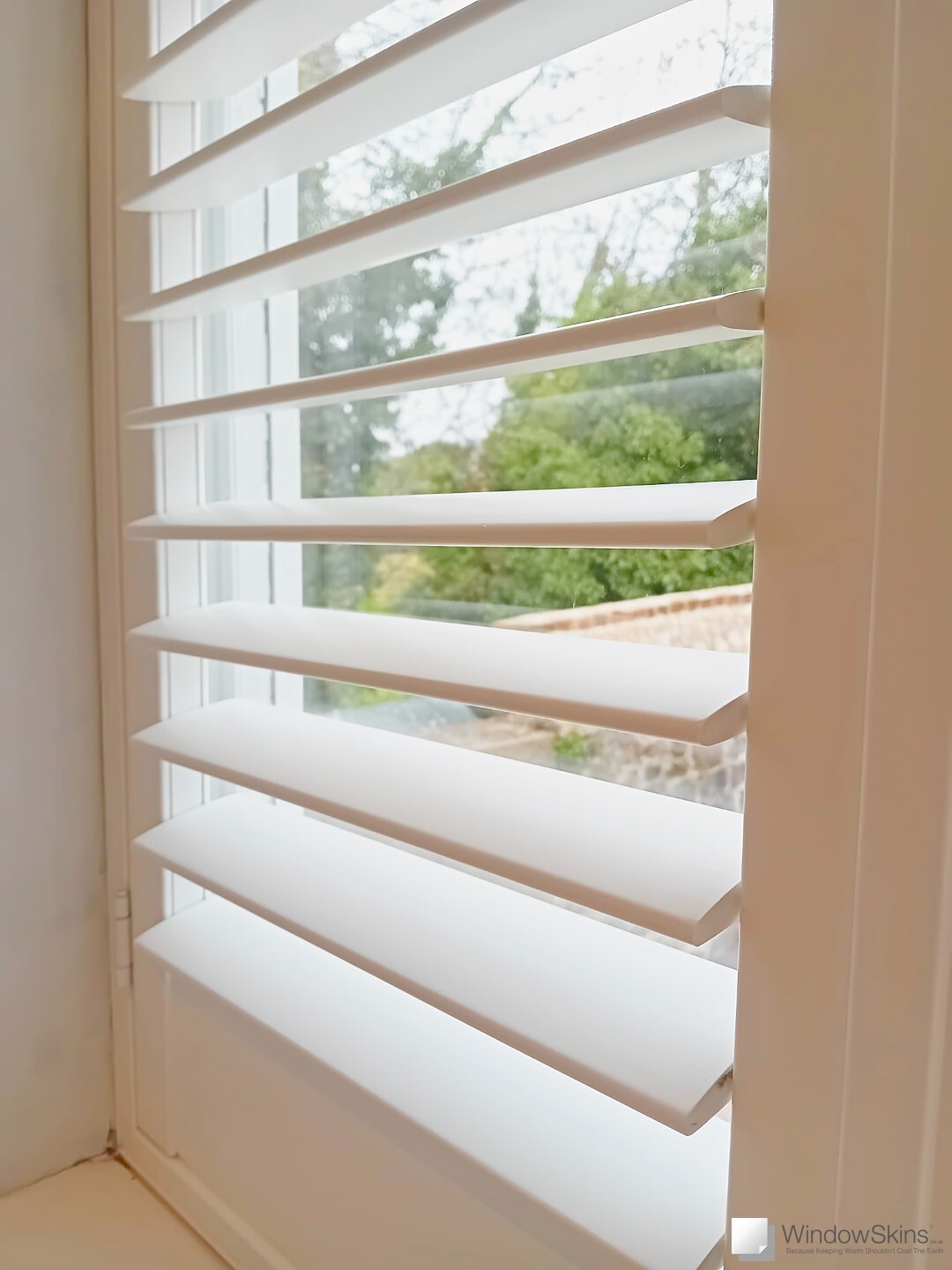
WindowSkins offers excellent compatibility with most types of shutters, including modern plantation and traditional panel shutters.
In most circumstances we are able to fit inside the window frame using the Subframe Placement.

For Plantation Shutters, it is important that the shutter frame does not excessively overlap the inside edge of the window frame.
In cases where the shutter frame significantly overlaps the window frame, we instead opt for an inverted subframe, fit directly to the back line of the shutter frame itself.
A minor drawback of the inverted fit method is that shutter louvres may, on occasion, only open 90% of the way due to a shared space requirement. However, in such cases, the performance trade-off is usually worthwhile (shutter doors may also be left slightly ajar, if appropriate).
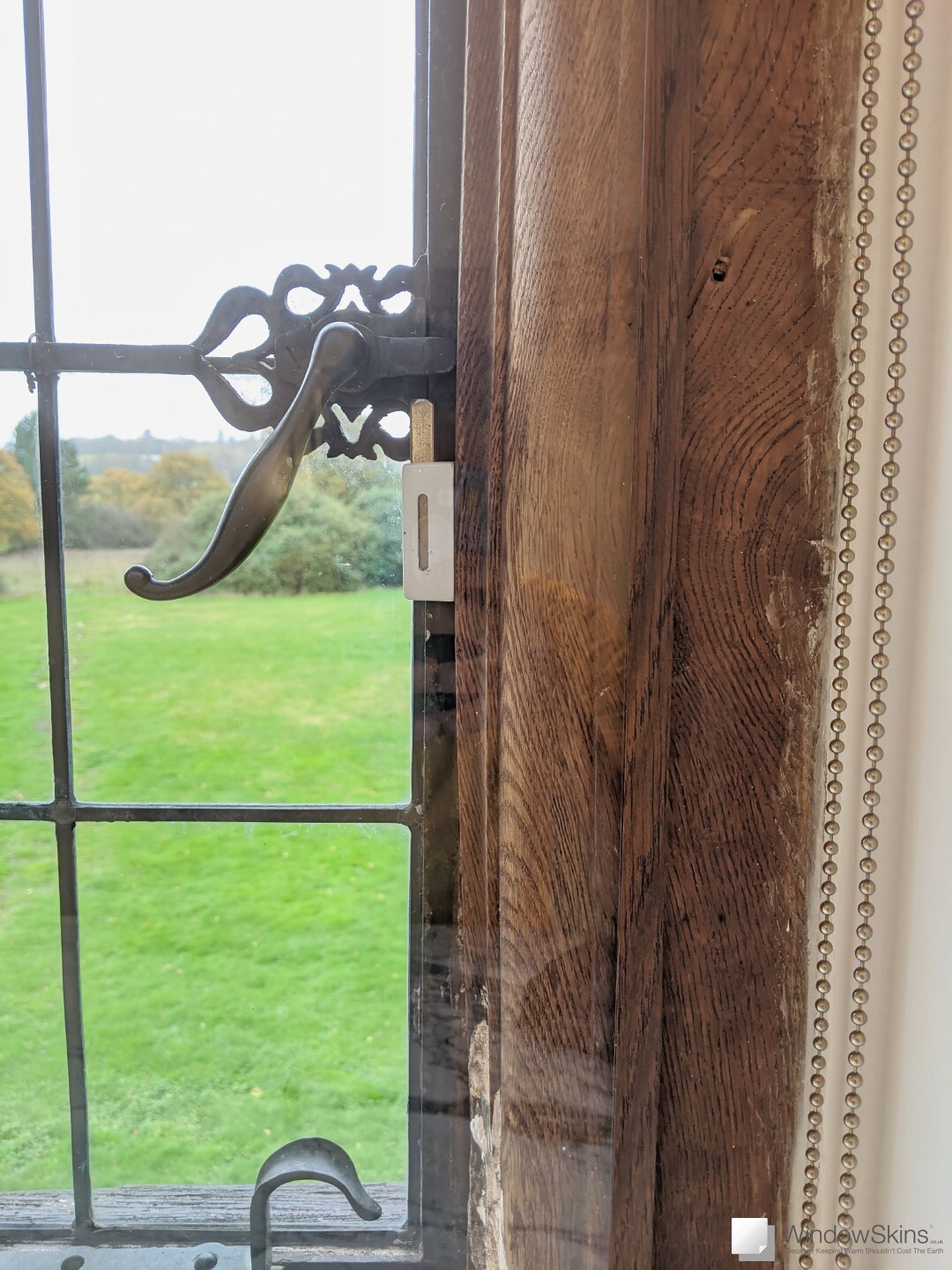
For Panel Shutters, sufficient depth of window frame is required to ensure shutter doors can fully close and, shutter knobs, where fitted, may need removal.
In some circumstances, we may remount the shutter hinge on spacers to provide some extra depth.
(It is important to note that 100% compatibility is not guaranteed and fitting for such is always on a best efforts basis)
Materials
WindowSkins are constructed using one of the following panel types;
- 1.5mm PETG (curved windows)
- 2mm PETG (standard build)
- 3mm Acrylic XT (recommended)
- 4mm Acrylic XT (best for noise)
PETG panels offer excellent impact resistance, allowing for a lightweight panel that is flexible, yet easy to handle, all whilst retaining strength.
For 3mm & 4mm panels, we switch to Acrylic XT.
Acrylic XT is a harder material, giving it increased durability in terms of scuffing and scratch resistance.
It also offers excellent optical clarity and our magnetic tapes show up brighter and whiter (when compared to PETG).
The additional stiffness from thicker materials may be better suited for larger windows (especially if draughty).
Finally, it should be noted that both materials provide excellent UV stability.
Noise & Air Pollution
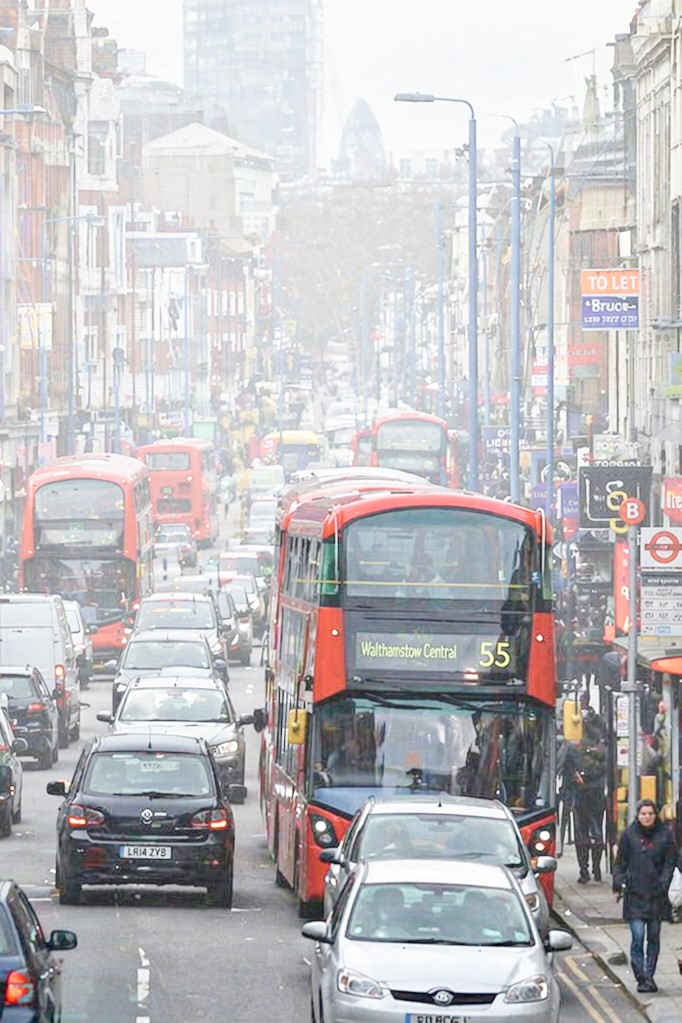
WindowSkins are a proven and effective solution to noise related problems (pedestrian, traffic, aircraft etc), with a comparative acoustic dampening performance similar to glass.
- 2mm panels reduce noise by around 30%
- 3mm panels reduce noise by around 40%
- 4mm panels reduce noise by around 50%
Where noise is concerned, the depth of air gap between glass and panel is highly important. For this reason, secondary glazing generally outperforms double glazing, due to the larger air gap.
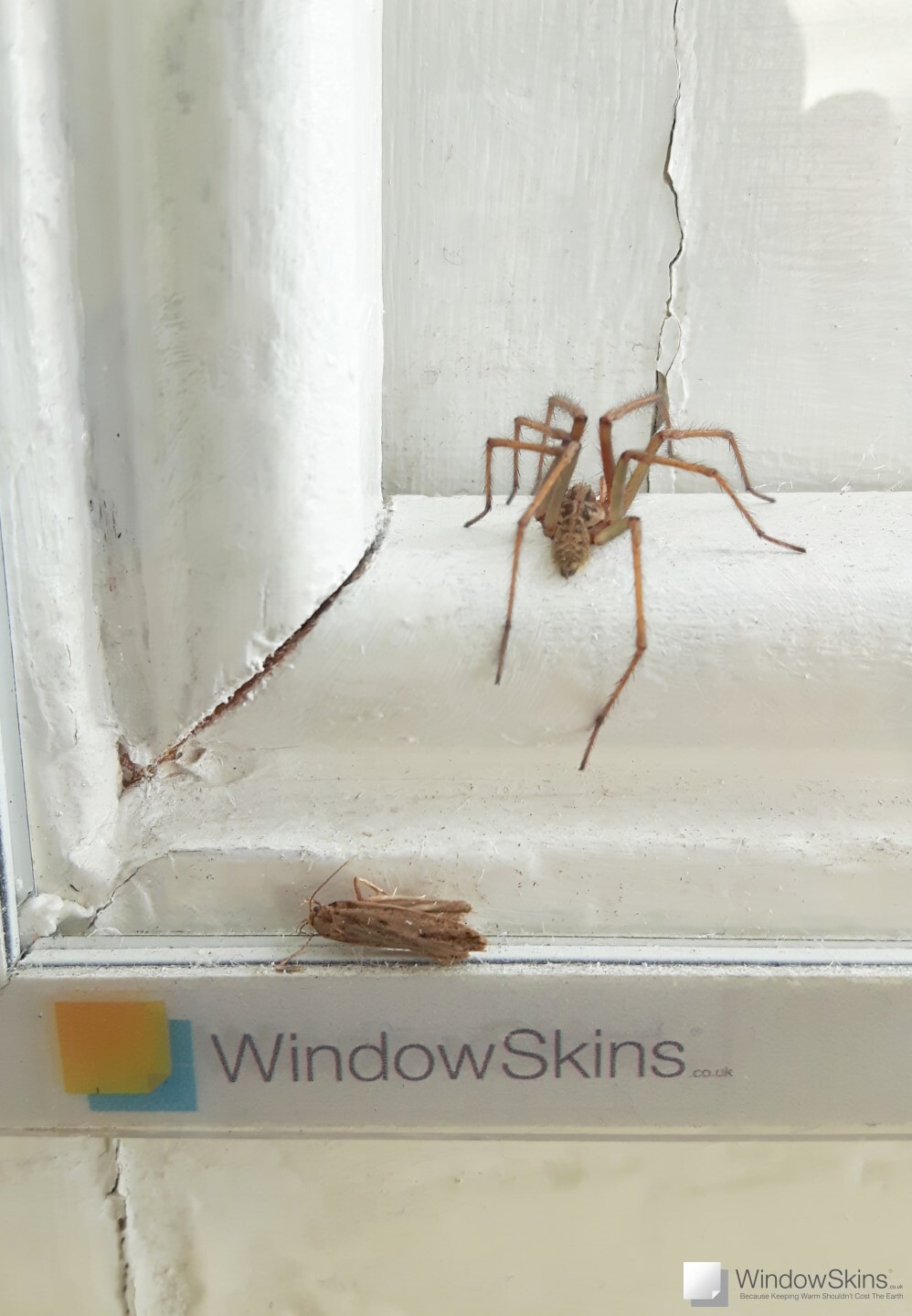
Incidentally, it is found that WindowSkins also serves to reduce the infusion of air pollutants and particulate matter into the home (as well as the occasional creepy crawly!)
When paired with good quality HEPA filtration, indoor air quality may be significantly improved, along with obvious associated health benefits.
Asymmetrical Windows
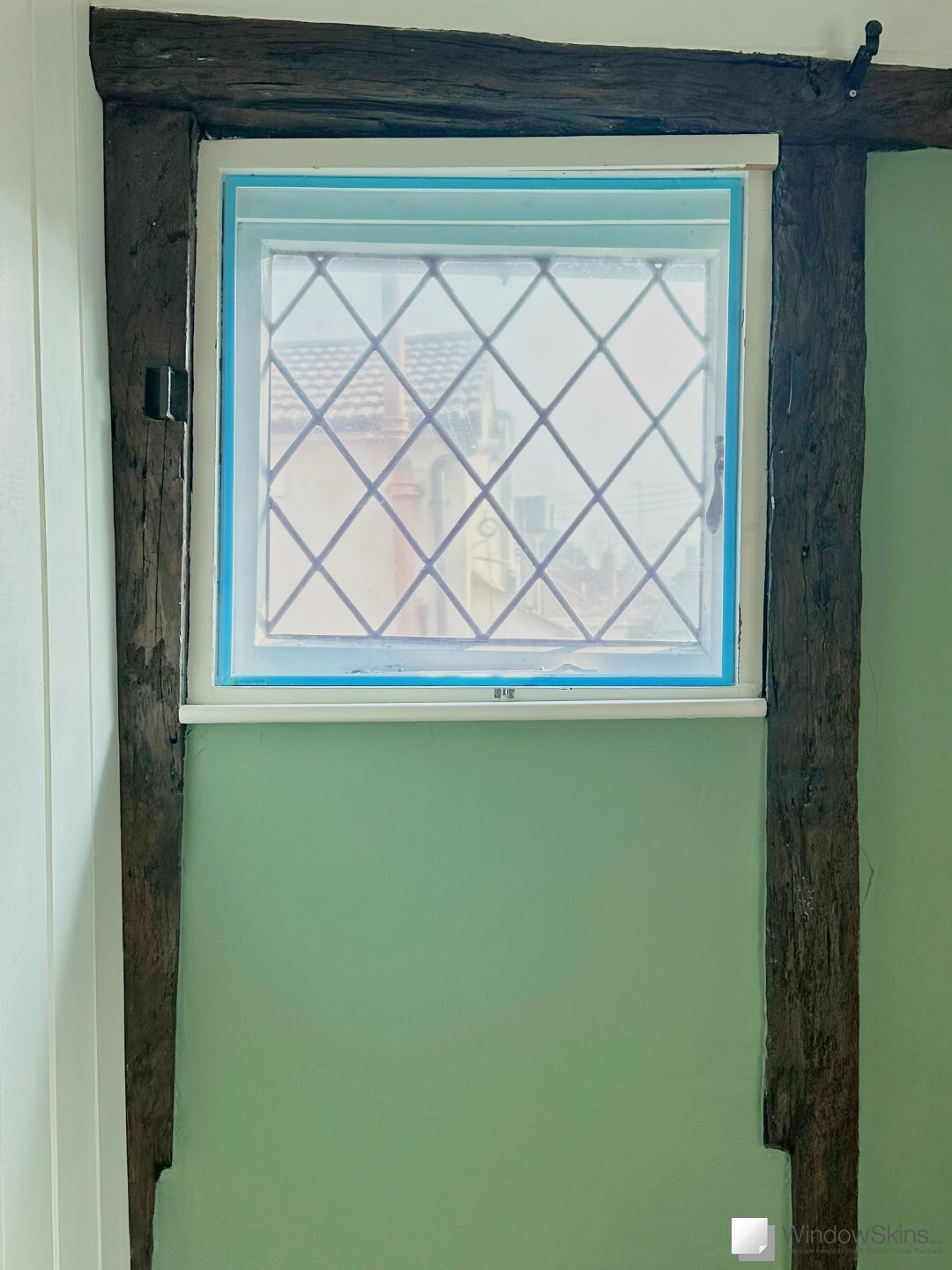
One of the challenges to fitting modern rectangular glazing panels against period timber windows, is that the windows are rarely true (i.e. they are asymmetrical).
Originally handcrafted, timber window fabrication was highly dependent on the skill and accuracy of the carpenter or joiner. This often leads to irregularities in shape.
Over time, the effects of weathering and subsidence can further exacerbate those irregularities. For example, this could make a window subtly diamond shaped.
Without correction, this can lead to ill-fitting panels, often too short and with poor alignment against the windows, which is aesthetically displeasing.
Our proprietary software and laser surveying solution measures every windows dimension and geometry making the necessary correcting adjustment for asymmetrical window frames, as standard.
We later trim those panels, in our workshop, to replicate those very same irregularities for near perfect results.
Curved & Arched
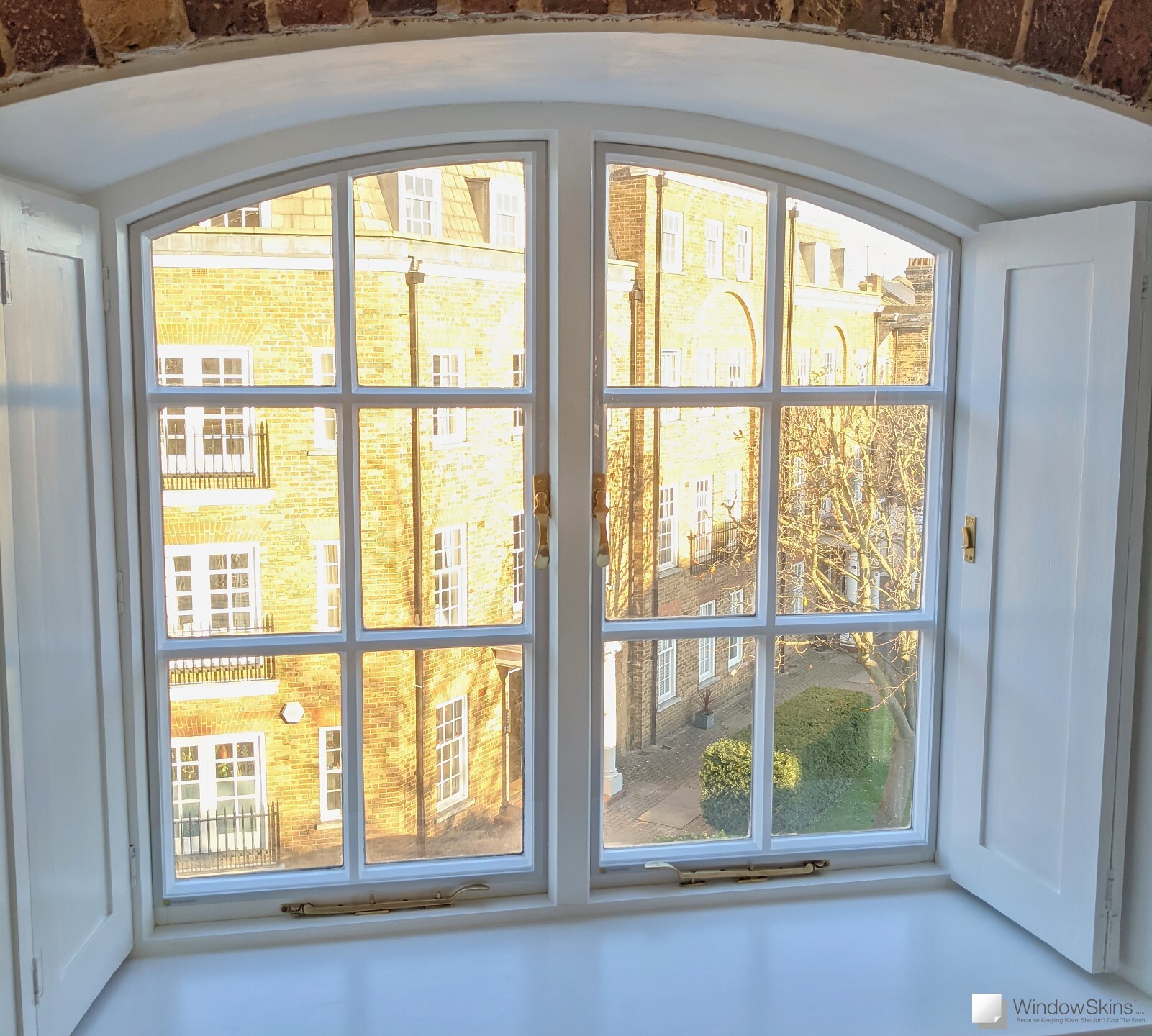
WindowSkins are a cost effective solution to the complexities caused by arched and curved windows.
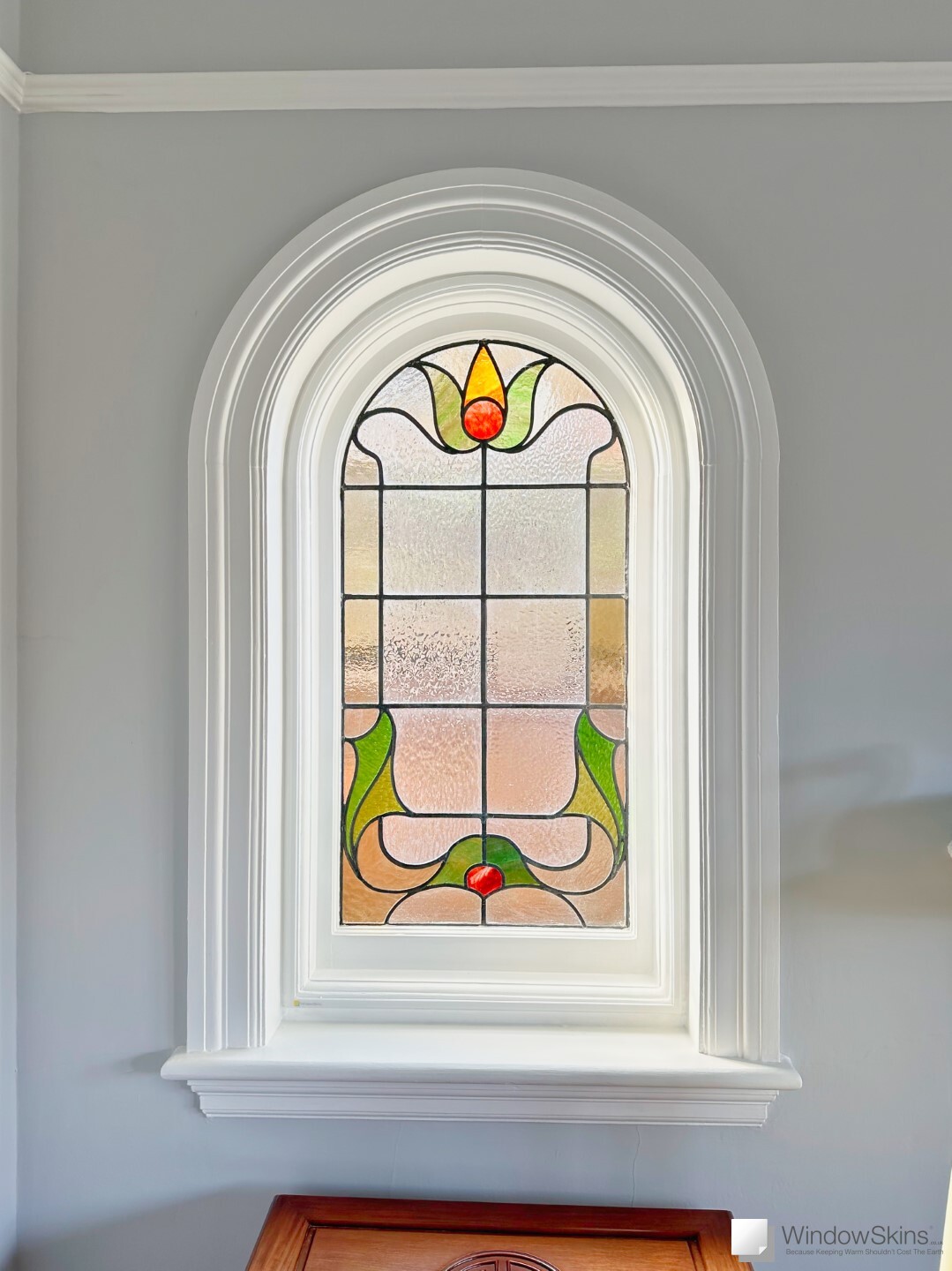
For arched windows (rounded at the top), we employ a proprietary templating method for near perfect results.
Unlike our regular CNC cut panels, arched panels are carefully cut by hand, in our workshop, using a custom jig to ensure accuracy.
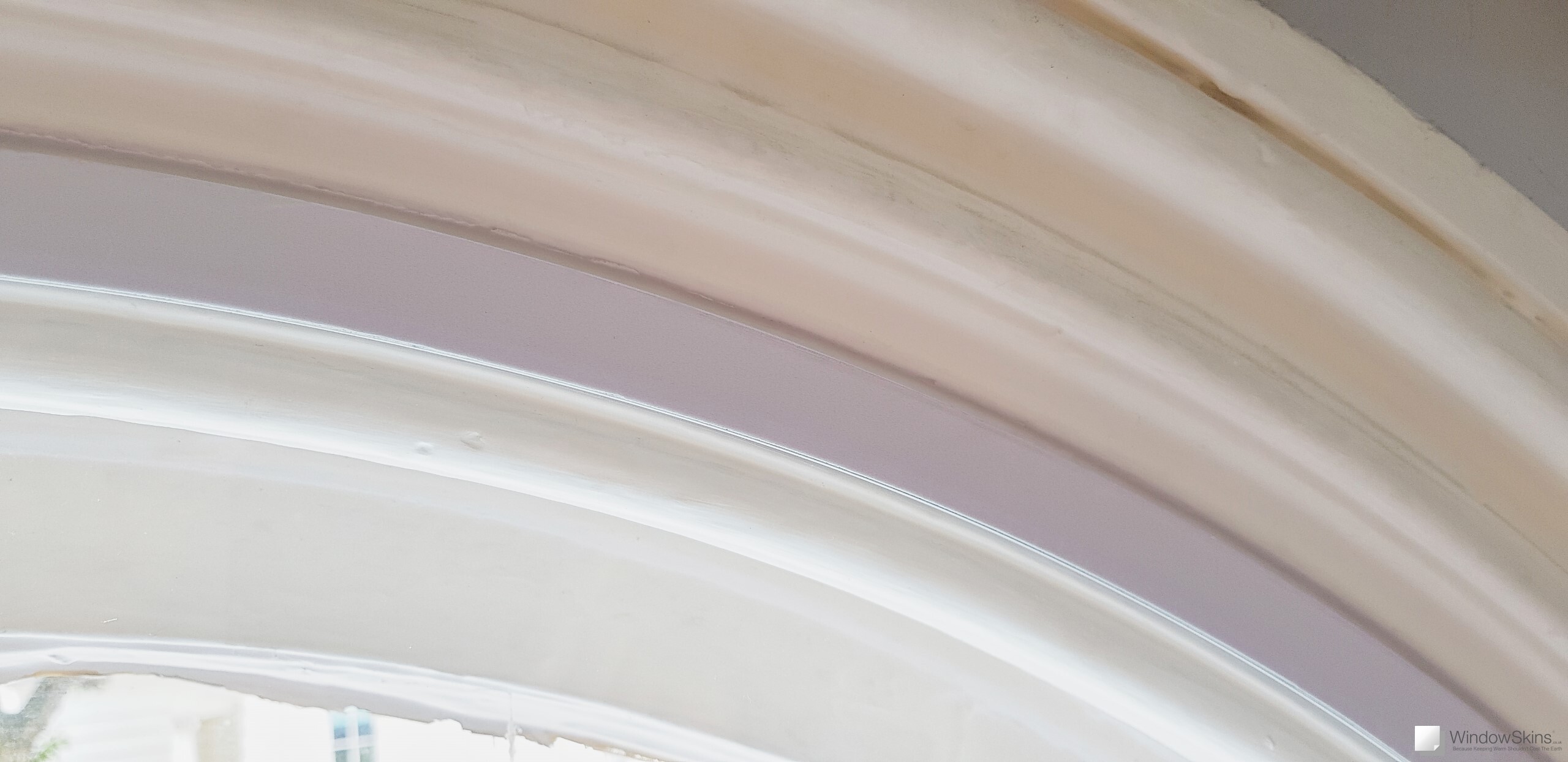
Ideally we opt for the Outer Placement but, where space is limited, we also have an arched subframe option.
For curved windows we employ a hybrid measure system, with additional computation for window irregularity across the chord.
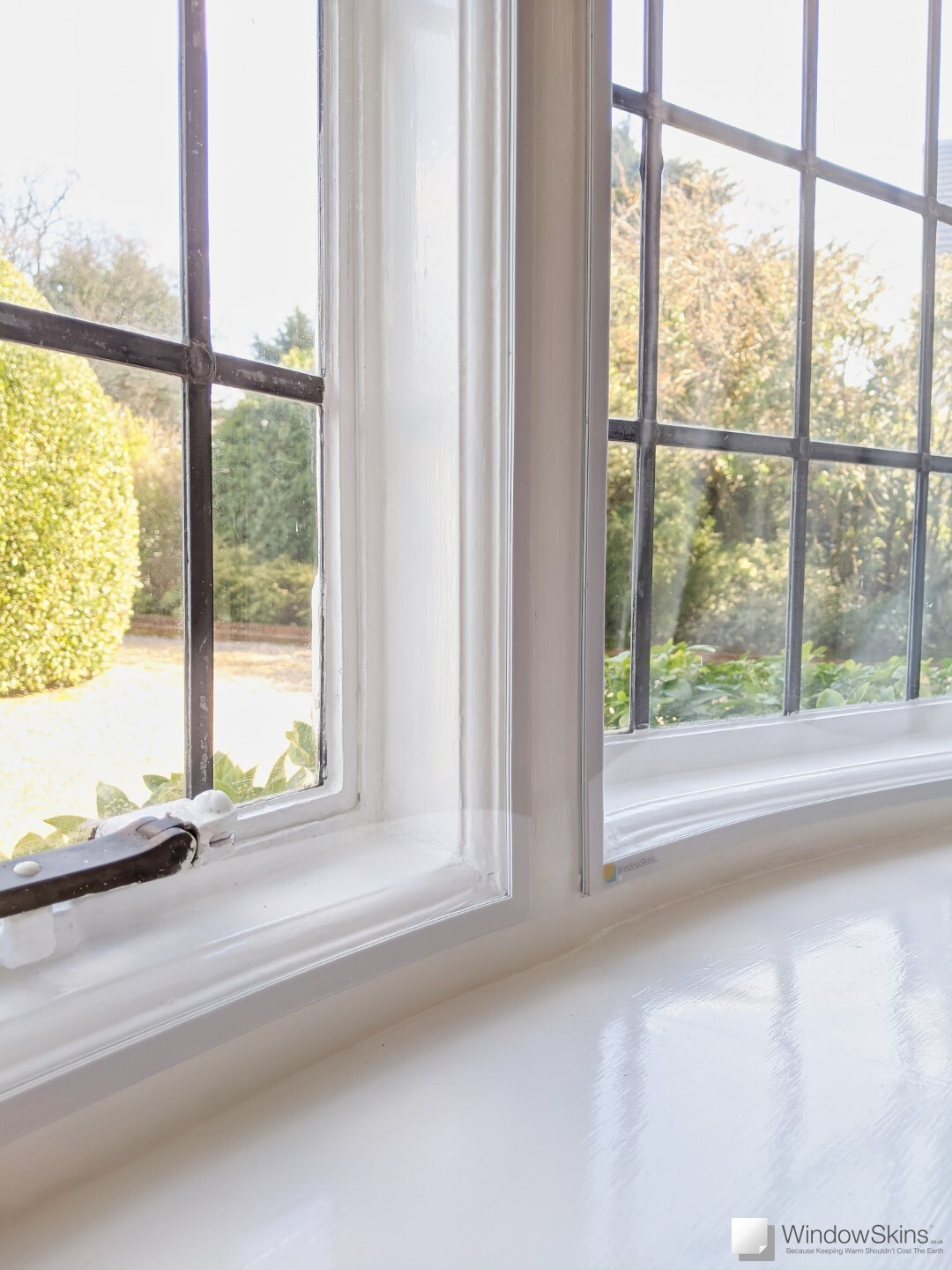
So that the WindowSkin can follow the curvature of the window frame, panel flexibility is required. For this reason, we limit maximum panel thickness to 2mm with 1.5mm being more likely.
Whilst this does not significantly affect thermal efficacy, noise reduction is limited to around 25-30%.
As before, if space is limited, we switch to a curved subframe option.
Care
With a little care, WindowSkins should give you years of trouble-free service – providing warmth, comfort and noise reduction.
The key rule for WindowSkins is no harsh abrasives.
We recommend gentle cleaning using mild detergent, water and a microfibre cloth.
A quality soft rubber or silicone squeegee may also be used, with light pressure, for larger areas.
For smaller spot cleaning, isopropyl alcohol or non-vinegar glass cleaner may be used with soft tissue.
Every WindowSkin has a room and window specific identifying label making storage and replacement simple.
And of course, all WindowSkins are covered by a three year repair or replace warranty with phone, email and postal support.
Find out how much better your casement windows could be
Arrange Your Free Quote Today
We are confident you will love your new WindowSkins – so why wait?
Arrange a free no obligation quote and soon you too can enjoy the comforts of a warmer, quieter home.
WindowSkins – Because Keeping Warm Shouldn’t Cost the Earth…